May 9, 2026
Journal
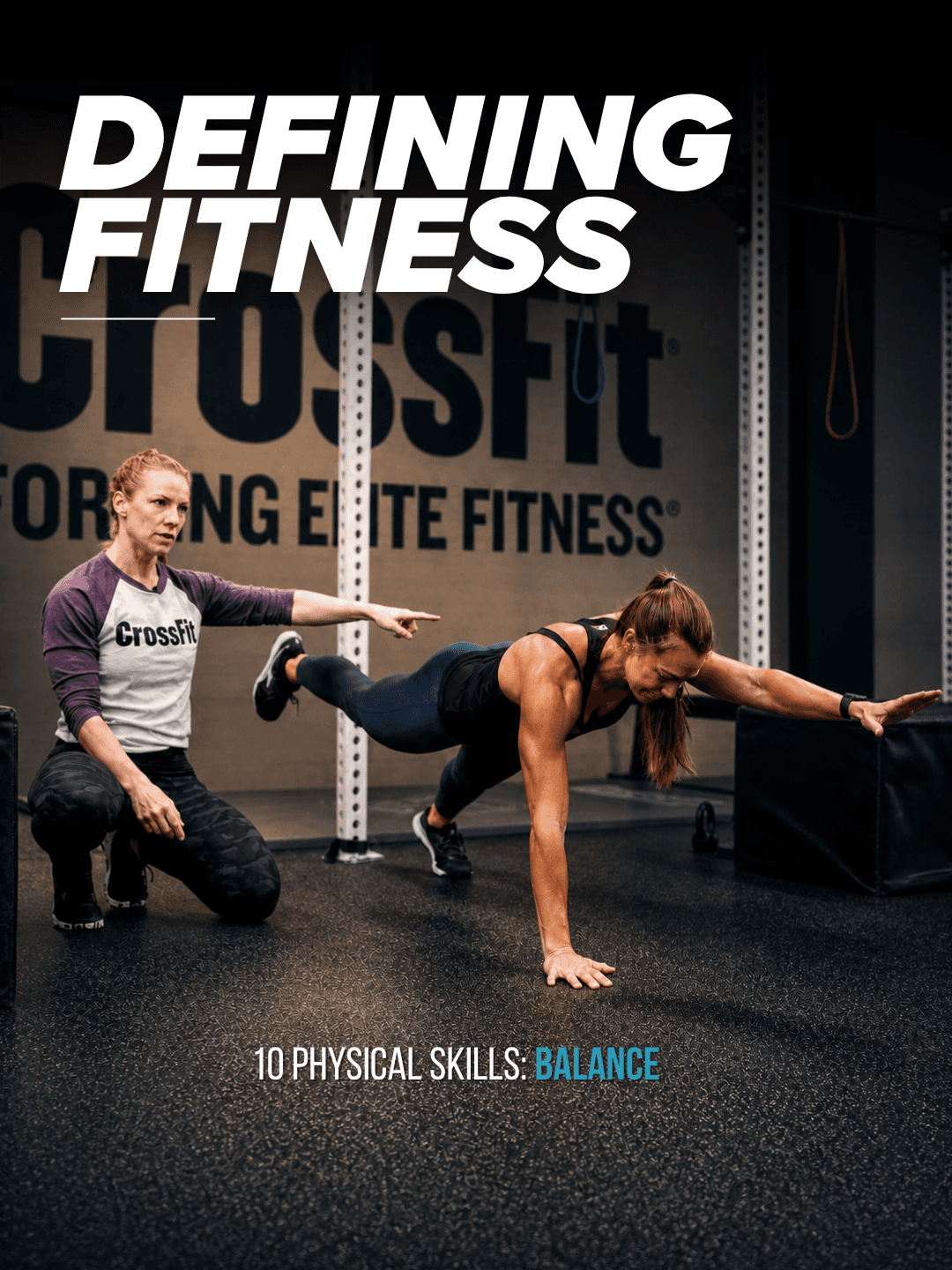
Defining Fitness: Balance
The Science of Stability: Why Balance Training Is Essential for Lifelong Health
The Science of Stability: Why Balance Training Is Essential for Lifelong Health
Key Takeaways
Balance predicts health and longevity. Measures of balance and movement control are powerful predictors of fall risk, functional independence, and even mortality.
Balance reflects integrated physiology. Stability depends on coordinated function between the musculoskeletal system, sensory systems, and the brain. When these systems decline, injury risk rises.
Balance must be trained dynamically. Real-world stability depends on the ability to control the body during movement, transitions, and perturbations—not simply static standing.
Balance as a Foundational Health Capacity
Balance is often viewed as a narrow athletic skill—something relevant to gymnasts, surfers, or rehabilitation patients. In reality, balance is one of the most fundamental determinants of physical health and functional independence. Every step taken, object lifted, or direction changed requires continuous regulation of the body’s center of mass relative to its base of support.
This process occurs largely outside conscious awareness. The nervous system constantly integrates sensory information from the visual system, the vestibular apparatus in the inner ear, and proprioceptive receptors within muscles and joints. These signals allow the brain to determine body position in space and generate appropriate motor responses to maintain stability [1,2].
When this system functions efficiently, individuals move confidently through complex environments. When it deteriorates, even minor perturbations—such as stepping on uneven ground or misjudging a step—can lead to falls or injury.
From a medical perspective, balance can therefore be understood as a systems-level health capacity. It reflects the integrated performance of multiple physiological systems, including muscular strength, rate of force development, joint stability, sensory processing, and cognitive reaction time [3].
Declines in any component of this system can compromise stability. As a result, balance impairments are often among the earliest observable indicators of broader physiological decline.
Balance and Injury Risk
Falls represent one of the most significant public health challenges worldwide. Among adults over the age of 65, falls are the leading cause of injury-related hospitalization and mortality [4]. Yet the mechanisms underlying falls are rarely attributable to simple muscle weakness alone.
Instead, most falls occur during dynamic transitions—walking, turning, stepping over obstacles, or recovering from unexpected perturbations. These situations require rapid neuromuscular coordination and the ability to reposition the center of mass quickly relative to the base of support [5]. Research in biomechanics and gerontology consistently demonstrates that deficits in balance recovery responses significantly increase fall risk [6]. When individuals cannot rapidly generate a corrective step or reposition their body effectively, even small disturbances can escalate into falls.
Importantly, balance-related assessments often outperform traditional strength or aerobic measures when predicting injury risk. For example, measures such as single-leg stance time, stepping reaction time, and dynamic balance tests provide strong predictive value for future falls and functional decline [5,7].
One particularly striking example comes from research examining the sitting-rising test. This simple test evaluates an individual’s ability to transition between standing and the floor without external support. In a large cohort study, lower sitting-rising test scores were strongly associated with increased risk of all-cause and cardiovascular mortality [8].
These findings suggest that balance and movement control are not merely indicators of mobility but reflect broader physiological resilience.
The Physiology of Balance
Maintaining balance requires coordination across several interconnected systems.
The musculoskeletal system provides the mechanical foundation for stability. Muscular strength and power allow individuals to reposition their center of mass and generate corrective movements when balance is challenged [3].
The proprioceptive system supplies information about joint position and movement. Specialized receptors within muscles and connective tissue continuously relay feedback about limb position, allowing the nervous system to detect subtle shifts in posture.
The vestibular system, located within the inner ear, detects head movement and spatial orientation relative to gravity. This system plays a critical role in maintaining equilibrium during dynamic movement.
The central nervous system integrates these signals and produces coordinated motor responses. Reaction time and cognitive processing speed influence how rapidly corrective movements can be initiated [2].
Age-related declines in any of these systems can impair balance. For example, reductions in muscle power limit the ability to generate rapid corrective steps, while slowed neural processing delays the initiation of those responses [3].
This systems-level integration explains why balance capacity often declines earlier than maximal strength or aerobic fitness. Maintaining balance therefore requires training that challenges coordination, reaction time, and neuromuscular integration—not simply isolated muscle strengthening.
Balance Across the Lifespan
Balance plays distinct but equally critical roles throughout human development and aging.
In childhood, balance supports the development of fundamental movement skills and physical literacy. Activities such as running, jumping, climbing, and navigating varied environments help develop proprioceptive awareness and postural control. Children who develop strong foundational movement competence are more likely to remain physically active during adolescence and adulthood [9]. In contrast, deficits in coordination or balance can reduce confidence in movement, discouraging participation in sport and physical activity.
During adulthood, balance supports occupational and recreational demands. Many injuries occur not during maximal exertion but during transitional movements—pivoting while carrying loads, stepping off uneven surfaces, or reacting to sudden changes in direction. Epidemiological data from occupational and military populations show that injuries frequently occur when individuals fail to adapt quickly to unexpected changes in movement or environment [10].
In later life, balance becomes tightly linked to independence and quality of life. Age-related declines in reaction time, muscle power, and sensory integration increase fall risk. However, evidence consistently demonstrates that balance training can substantially reduce fall incidence and preserve functional mobility in older adults [4]. Exercise programs that incorporate coordination, dynamic movement, and strength training have been shown to significantly improve stability and reduce fall risk.
Why Balance Must Be Trained Dynamically
Traditional exercise programs often emphasize isolated muscle strengthening or predictable movement patterns. While these approaches can improve strength and endurance, they may fail to adequately challenge the neuromuscular coordination required for real-world stability.
Balance in daily life is rarely static. Instead, it occurs during movement, transitions, and interactions with unpredictable environments. Effective balance training must therefore expose individuals to varied movement patterns and dynamic conditions that require continuous adjustment.
Research in motor control and injury prevention suggests that training involving multidirectional movement, rapid transitions, and changes in body position improves neuromuscular coordination and stability [10]. These adaptations enhance the nervous system’s ability to respond quickly and effectively when balance is challenged.
Using CrossFit To Train Balance
CrossFit’s methodology aligns closely with the biological demands of balance and stability. Rather than isolating individual muscle groups, CrossFit emphasizes constantly varied functional movements performed at relative intensity.
Movements such as squats, lunges, Olympic lifts, and gymnastic skills require athletes to maintain postural control while managing external loads and complex movement patterns. These tasks challenge the neuromuscular system to coordinate strength, balance, and proprioception simultaneously.
Additionally, CrossFit workouts frequently involve transitions between movements, speeds, and planes of motion. These transitions require athletes to continually adjust posture and coordination, closely mirroring the demands of real-world movement.
Examples include:
Single-leg movements, such as lunges or step-ups, which challenge unilateral stability.
Olympic weightlifting, which requires precise control of the center of mass during rapid transitions under load.
Gymnastic movements, such as handstands or ring work, which demand high levels of postural control and spatial awareness.
Loaded carries, which require constant stabilization while walking.
Importantly, CrossFit training is scalable. Balance challenges can be adjusted for individuals with varying fitness levels while preserving the core stimulus of neuromuscular coordination and stability.
Balance and Quality of Life
Fear of falling is a major predictor of reduced physical activity and functional decline. Even individuals who have never experienced a fall may restrict their movement if they lack confidence in their stability [7].
Maintaining balance capacity therefore helps preserve movement confidence, enabling individuals to remain physically active and socially engaged. Activities that challenge coordination and postural control may produce benefits that extend beyond physical fitness, supporting independence and overall well-being.
CrossFit’s methodology naturally cultivates the coordination, stability, and adaptability required for real-world movement.
By preserving balance capacity, individuals maintain not only physical capability but also the confidence required to move freely through the world.
Action Steps for Coaches
Train balance dynamically. Real-world stability occurs during movement. Incorporate exercises that challenge balance while walking, lifting, turning, or changing direction rather than relying only on static holds.
Prioritize unilateral work. Movements such as lunges, step-ups, single-leg deadlifts, and pistols help correct asymmetries and improve joint stability by forcing each limb to stabilize independently.
Use loaded carries. Farmer’s carries, suitcase carries, and front rack carries require constant postural adjustment and are highly effective for developing whole-body stability under load.
Value control under fatigue. Encourage athletes to maintain posture, alignment, and balance late in workouts. Stability under fatigue is highly relevant to injury prevention in real-world movement.
References
1. Bingham, J. T., Choi, J. T., & Ting, L. H. (2011). Stability in a frontal plane model of balance requires coupled changes to postural configuration and neural feedback control. Journal of Neurophysiology, 106(1), 437–448. https://doi.org/10.1152/jn.00010.2011
2. Maki, B. E., & McIlroy, W. E. (2006). Control of rapid limb movements for balance recovery: Age-related changes and implications for fall prevention. Age and Ageing, 35(Suppl 2), ii12–ii18. https://doi.org/10.1093/ageing/afl078
3. Reid, K. F., & Fielding, R. A. (2012). Skeletal muscle power: A critical determinant of physical functioning in older adults. Exercise and Sport Sciences Reviews, 40(1), 4–12. https://doi.org/10.1097/JES.0b013e31823b5f13
4. Sherrington, C., Fairhall, N. J., Wallbank, G. K., Tiedemann, A., Michaleff, Z. A., Howard, K., Clemson, L., Hopewell, S., & Lamb, S. E. (2020). Exercise for preventing falls in older people living in the community. Cochrane Database of Systematic Reviews, CD012424. https://doi.org/10.1002/14651858.CD012424.pub2
5. Pijnappels, M., Delbaere, K., Sturnieks, D. L., & Lord, S. R. (2010). The association between choice stepping reaction time and falls in older adults—A path analysis model. Age and Ageing, 39(1), 99–104. https://doi.org/10.1093/ageing/afp200
6. Delbaere, K., Close, J. C. T., Heim, J., Sachdev, P. S., Brodaty, H., Slavin, M. J., & Lord, S. R. (2010). A multifactorial approach to understanding fall risk in older people. Journal of the American Geriatrics Society, 58(9), 1679–1685. https://doi.org/10.1111/j.1532-5415.2010.03017.x
7. Lord, S. R., Sherrington, C., Menz, H. B., & Close, J. C. T. (2007). Falls in older people: Risk factors and strategies for prevention (2nd ed.). Cambridge University Press.
8. Araújo, C. G. S., de Souza e Silva, C. G., Myers, J., Laukkanen, J. A., Ramos, P. S., & Ricardo, D. R. (2025). Sitting-rising test scores predict natural and cardiovascular causes of death in middle-aged and older men and women. European Journal of Preventive Cardiology. https://doi.org/10.1093/eurjpc/zwaf325
9. Stodden, D. F., Goodway, J. D., Langendorfer, S. J., Roberton, M. A., Rudisill, M. E., Garcia, C., & Garcia, L. E. (2008). A developmental perspective on the role of motor competence in physical activity: An emergent relationship. Quest, 60(2), 290–306. https://doi.org/10.1080/00336297.2008.10483582
10. Dos’Santos, T., Thomas, C., Comfort, P., & Jones, P. A. (2019). Role of change-of-direction biomechanics in injury risk and performance. Sports Medicine, 49(3), 367–383. https://doi.org/10.1007/s40279-018-1010-3
Have something to say? Email us at
‹ Previous
Next ›
Subscribe to our newsletter

Sign up with your email address to receive news and updates.
