Jan 31, 2026
Journal
Defining Fitness: Stregnth
Strength, defined as the capacity to produce and sustain force, is foundational to human function. For years, cardio capacity has dominated the public health narrative for longevity. Yet a robust body of evidence now positions muscular strength alongside, and at times independently of, aerobic fitness as a powerful predictor of survival. Functional strength—the type CrossFit trains—is not merely about lifting heavy; it is about the ability to apply force across a range of movements, speeds, and contexts. This capability allows individuals to maintain independence, resist injury, and endure stressors that otherwise accelerate decline
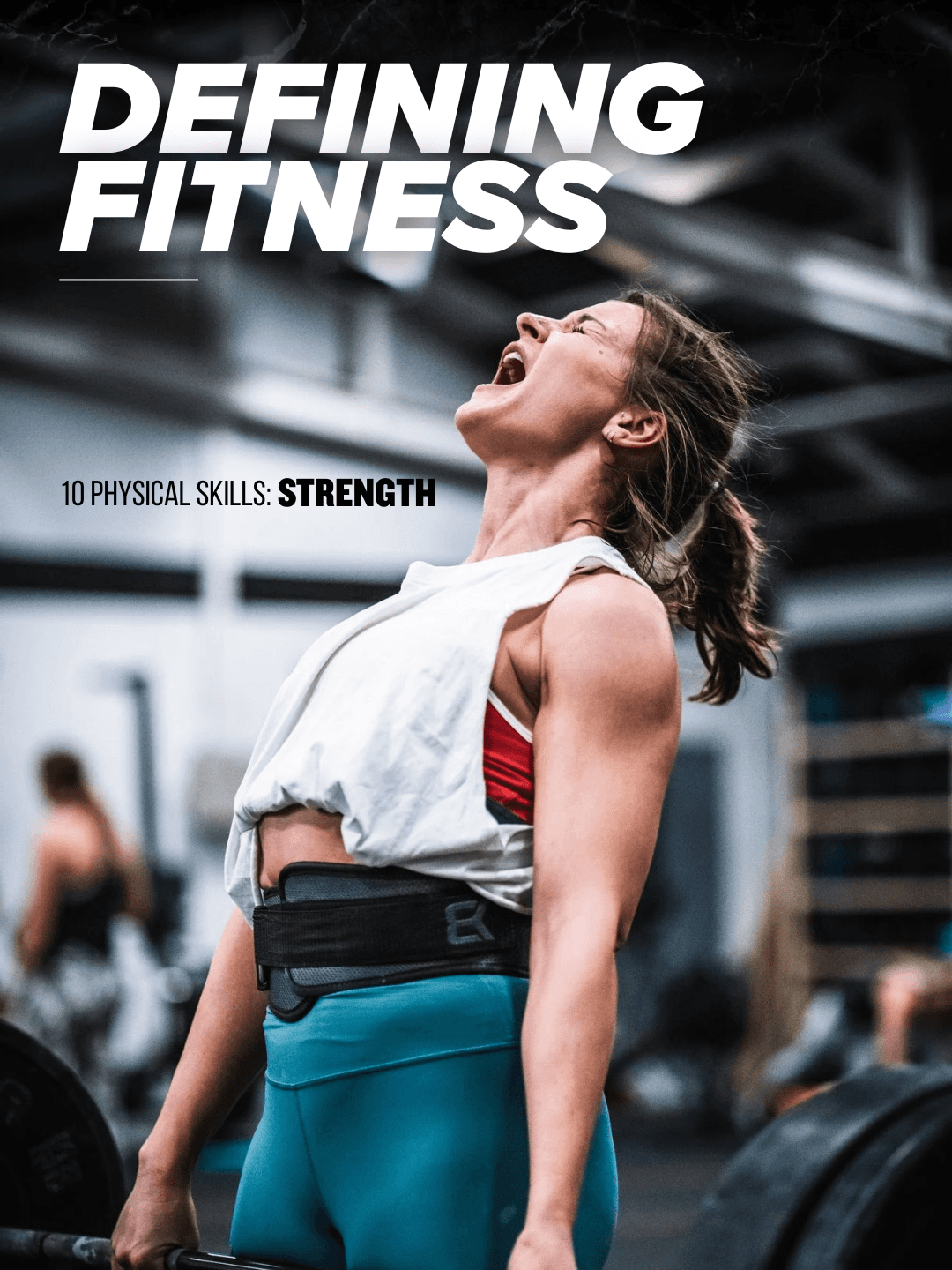
Built to Last: Why Strength Is the Ultimate Longevity Upgrade
Written by Dr. Janette Watkins
Key takeaways
Muscular weakness predicts early death. Across populations, lower muscular strength—especially grip and lower-body force production—is consistently associated with higher all-cause and cardiovascular mortality.
Strength training extends healthspan. Regular participation in resistance-based exercise reduces mortality risk, preserves functional independence, and mitigates chronic disease.
Functional strength transfers to life. The ability to bear, lift, press, and transfer load underpins mobility, resilience to injury, and the capacity to tolerate physiological stress—outcomes tightly tied to survival.
Strength, defined as the capacity to produce and sustain force, is foundational to human function. For years, cardio capacity has dominated the public health narrative for longevity. Yet a robust body of evidence now positions muscular strength alongside, and at times independently of, aerobic fitness as a powerful predictor of survival. Functional strength—the type CrossFit trains—is not merely about lifting heavy; it is about the ability to apply force across a range of movements, speeds, and contexts. This capability allows individuals to maintain independence, resist injury, and endure stressors that otherwise accelerate decline.
The epidemiological signal: strength and mortality
One of the most robust findings in population health research is the association between muscular strength and mortality risk. Ruiz and colleagues prospectively followed more than 8,700 men for nearly two decades and found that those in the lowest tertile of muscular strength experienced significantly higher all-cause mortality, even after adjusting for age, cardiorespiratory fitness, body mass index, and traditional risk factors [1]. This study was among the first to show that strength is not just correlated with health; it adds unique prognostic information.
Subsequent research has extended these observations across sexes, ages, and global cohorts. Grip strength—a simple surrogate for global strength—has emerged as a powerful metric. In pooled analyses from the Prospective Urban Rural Epidemiology (PURE) study, weaker grip strength was associated with higher risk of cardiovascular events and all-cause mortality across 17 countries spanning low-, middle-, and high-income settings [2]. These findings suggest that strength’s predictive value is not confined to specific populations but is a generalizable marker of biological resilience.
Lower-body strength appears to matter even more. Functional tasks that tax the lower limbs—repeated chair rises, stair climbs, floor transfers—integrate strength with balance and coordination. In large prospective cohorts, poorer performance on these functional strength tasks predicted higher rates of disability and death [3]. The implication is clear: strength that translates into functional capacity, not just momentary torque, is vital for survival.
Resistance training and reduced mortality risk
Observational measures of strength raise important questions about causality. Do stronger people live longer because they are stronger, or because they are simply healthier or more active? Randomized and prospective studies help clarify this. Muscle-strengthening activity, defined in public health guidelines as resistance exercise performed at least two days per week, is independently associated with lower mortality risk in large cohort studies. In a nationwide analysis of nearly 416,000 U.S. adults, individuals who met strength training recommendations exhibited a lower risk of all-cause mortality, even after controlling for aerobic physical activity levels [4]. Crucially, those who combined aerobic and muscle-strengthening activities experienced the lowest mortality, indicating additive benefits.
A meta-analysis pooling data from multiple cohorts reported that participation in resistance training was associated with a roughly 10–17% reduction in all-cause mortality risk, highlighting that strength training is not only safe but broadly protective across populations [5]. These findings are mirrored in older adults: in a landmark study of over 5,000 adults aged 65 and older, higher baseline leg strength and greater engagement in resistance exercise predicted lower risk of functional decline, institutionalization, and death over seven years of follow-up [6].
Beyond mortality, resistance training confers measurable benefits on intermediate health markers closely tied to longevity. Regular strength training improves insulin sensitivity, reduces resting blood pressure, enhances lipid profiles, and preserves bone density—all changes associated with reduced disease risk [7,8]. Notably, these improvements are independent of aerobic exercise effects, underscoring that strength training is not redundant but complementary to other physical activity domains.
Strength, function, and independence
The human movement system is integrative: strength does not exist in isolation but interacts with balance, mobility, neuromuscular control, and even cognition. When strength declines with age or inactivity, compensations emerge. Muscles must work harder to stabilize joints; movement patterns become stiff or uncoordinated; energy expenditure rises for basic tasks. Over time, these compensations increase the risk of falls, metabolic dysregulation, and loss of independence—all of which are predictors of morbidity and mortality.
Functional decline is not merely an exercise science concept; it has real world consequences. Falls, for instance, rank among the leading causes of injury-related mortality in adults over 65, and a large Cochrane review confirms that programs including strength, balance, and gait training significantly reduce fall risk [9]. The protective effect of strength training extends to recovery from acute stressors: surgical patients with better preoperative strength recover faster and with fewer complications than their weaker peers [10].
CrossFit and strength: research-aligned practice
CrossFit’s emphasis on strength aligns closely with the evidence above. The methodology’s inclusion of barbell movements (e.g., squats, deadlifts, presses), gymnastics (pull-ups, ring dips), and loaded carries fosters force production across joints, planes of motion, and contexts. Several longitudinal observational studies in CrossFit populations demonstrate improvements in strength and functional performance metrics over time, with participants achieving meaningful gains in squat, deadlift, and press capabilities after consistent training [11]. These improvements mirror outcomes seen in structured resistance training research outside the CrossFit paradigm.
Critically, CrossFit’s emphasis on progressive overload, technical proficiency, and varied stimulus reflects best practices in strength training science. Progressive overload—the systematic increase of training stimulus over time—is the primary driver of strength adaptation. Classic resistance training research shows that loading at intensities sufficient to challenge the neuromuscular system (e.g., ≥60% of 1RM) produces greater gains in muscle strength and functional capacity than lower-intensity programs [12]. CrossFit’s scalable programming allows athletes to train within these effective intensity zones, while varied movements protect against overuse injury and promote broad capacity.
The use of complex, compound lifts in CrossFit also aligns with evidence favoring multi-joint exercises for functional strength. Multi-joint movements recruit large muscle groups and require coordination across joints, translating more directly to daily life tasks than isolated machine work [13]. For example, squatting under load improves hip and knee extensor strength, tissue resilience, and movement control in ways that benefit stair climbing, rising from a chair, and fall recovery—functional domains that predict independence.
Moreover, research supports that strength gains transfer to metabolic health. In CrossFit practitioners, regular resistance training has been associated with improved body composition, greater lean mass, and enhanced metabolic profiles, outcomes linked to lower cardiometabolic risk [14]. While CrossFit research is still emerging, these findings echo broader resistance training literature and validate the CrossFit model’s relevance to longevity.
Why strength maps to longevity
From a physiological perspective, strength reflects the integrated performance of multiple systems: musculoskeletal integrity, endocrine regulation, neuromuscular communication, and energetic capacity. Greater strength enhances bone remodeling through mechanical load, protects joints by improving force absorption and distribution, and preserves muscle as a metabolic reservoir that improves glucose regulation. These mechanisms directly counter processes that drive aging and chronic disease.
Equally important is resilience: individuals with higher strength possess greater physiological reserve. When confronted with stressors—whether illness, injury, or surgery—stronger systems can absorb, adapt, and recover more effectively. This concept of reserve capacity is central to healthy aging and aligns with evidence that strength predicts not only survival but quality of life.
The bottom line
Strength is not luxury; it is longevity. A robust body of research shows that strength predicts all-cause and cardiovascular mortality, protects functional independence, and interacts with metabolic systems in ways that reduce disease risk. Resistance training—whether traditional or CrossFit-based—is a powerful intervention to preserve and enhance strength across the lifespan.
For clinicians and coaches, the message is clear: prioritize strength as a core health outcome, not just a performance statistic. Structure programming to build force production across the musculoskeletal system, emphasize technical mastery and progressive overload, and measure strength longitudinally. The payoff is not only more kilograms on the barbell—it is the foundation of lifelong capability, independence, and survival.
Action Steps for Coaches
Treat strength as a health vital sign. Track foundational strength patterns (squat, hinge, press, pull, carry) over time, not just peak numbers. Longitudinal trends matter more than single benchmarks and reflect physiological reserves tied to longevity.
Prioritize lower-body and trunk strength. Lower-extremity weakness is strongly linked to falls, disability, and mortality. Program squats, hinges, unilateral leg work, and loaded carries consistently to support independence and real-world function.
Train across intensities, not just heavy. Combine heavy loading for maximal force, moderate loads for hypertrophy and resilience, and controlled tempo or paused work for joint control. This mirrors evidence-based resistance training and reduces injury risk.
Demand quality through full ranges of motion. Strength expressed through usable ranges transfers best to daily life. Emphasize technically sound, full-ROM squats, hinges, and overhead work over partial-range maximal loading.
References
Ruiz, J. R. et al. Association between muscular strength and mortality in men: Prospective cohort study. BMJ2008;337:a439.
Leong, D. P. et al. Prognostic value of grip strength: Findings from the PURE study. Lancet 2015;386(9990):266–273.
Bean, J. F. et al. Lower extremity strength and functional decline in older adults. J Gerontol A Biol Sci Med Sci2002;57(5):M228–232.
Kamada, M. et al. Muscle-strengthening activities and mortality: NHANES analysis. Am J Prev Med2017;52(5):653–660.
Grøntved, A. et al. Muscle-strengthening activities and risk of all-cause mortality: Meta-analysis. JAMA Intern Med2017;177(4):534–543.
Manini, T. M. et al. Leg strength and mortality in older adults: Longitudinal findings. J Gerontol A Biol Sci Med Sci2007;62(10):1157–1162.
Strasser, B., Siebert, U., & Schobersberger, W. Resistance training in the treatment of metabolic syndrome. Diabetologia 2010;53(2):221–231.
Zhao, R. et al. Resistance training and bone mineral density in older adults: Meta-analysis. Osteoporos Int2015;26(5):1605–1618.
Sherrington, C. et al. Exercise for preventing falls in older people living in the community. Cochrane Database Syst Rev 2019;1:CD012424.
Cheung, B. M. Y. et al. Prehabilitation and outcomes in surgical patients: Systematic review. Ann Surg2020;272(6):1007–1013.
Feito, Y. et al. Functional fitness outcomes associated with long-term CrossFit participation. J Strength Cond Res2018;32(4):e49–e57.
Ratamess, N. A. et al. Progression models in resistance training for healthy adults. Med Sci Sports Exerc2009;41(3):687–708.
Schick, E. E. et al. Comparison of muscle activation when performing barbell back squat and machine squat. J Strength Cond Res 2010;24(3):779–784.
Smith, M. M. et al. CrossFit-based high-intensity power training improves aerobic capacity and body composition. J Strength Cond Res 2013;27(11):3159–3172.
Have something to say? Email us at
‹ Previous
Next ›

Subscribe to our newsletter

Sign up with your email address to receive news and updates.
